If your heels scream the moment you stand up after sitting — whether it’s getting out of the car, off the couch, or up from your desk — you’re dealing with one of the most common and frustrating foot problems out there: heel startup pain.
Most people notice it after periods of rest, especially first thing in the morning or after sitting for a long time. The good news? There’s a clear reason for it — and even better solutions.
At Complete Feet in Hoover, AL, we help patients with this exact complaint every day. Here’s what’s happening and how to make it stop.
The Most Common Cause: Plantar Fasciitis
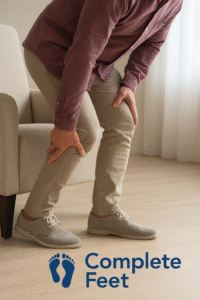
Heel pain after sitting is one of the classic symptoms of plantar fasciitis, an inflammation of the thick band of tissue (the plantar fascia) that supports your arch.
When you sit, this tissue tightens.
When you stand, it stretches suddenly.
That quick stretch = sharp heel pain.
This is why:
-
The first few steps are terrible
-
It eases up a bit as you walk
-
Then returns again after rest
It’s a cycle that won’t break until the underlying mechanics are corrected.
Other Possible Causes
While plantar fasciitis is by far the most common, other issues can trigger heel pain after rest:
1. Tight Calf Muscles
Tight calves increase tension on the Achilles tendon, which pulls on the heel and worsens pain.
2. Poor Shoe Support
Thin, flat, or worn-out shoes don’t protect the heel or support the arch, causing strain.
3. Flat Feet or High Arches
Both extremes overload the heel in different ways, leading to inflammation after rest.
4. Long Hours on Hard Floors
Teachers, nurses, retail workers, and warehouse staff are especially prone to this.
How to Fix Heel Pain After Sitting
You can ease symptoms on your own — but long-term relief requires correcting how your foot functions.
1. Stretch Your Calves and Arch
A simple wall stretch or rolling your arch on a ball before standing can reduce that first-step pain.
2. Ice the Heel
10–15 minutes after activity helps reduce inflammation.
3. Wear Supportive Shoes Indoors
Avoid going barefoot on hardwood or tile. Your plantar fascia needs support, not constant strain.
4. Custom Orthotics (The Most Effective Solution)
Orthotics correct the mechanics that cause plantar fasciitis in the first place.
At Complete Feet, we create custom orthotics from precise impressions, not scans — giving you true arch support, heel stabilization, and long-lasting relief.
Most patients report:
-
Reduced morning/startup pain
-
Less heel inflammation
-
Better comfort throughout the day
-
No more limping after sitting
Don’t Let Heel Pain Control Your Day
If your first steps after sitting feel like walking on a nail, it’s time to treat the problem — not just the symptoms.
Call 205-822-1606 today to schedule your custom orthotics appointment at Complete Feet in Hoover, AL.
Leave a Reply